Saturday, January 17, 2009

Bocas del Toro

After we dropped off our bags at the hotel Jack, the Dutch girls, and I headed out to a beach on the other side of the island. The advertised 20 minute ride ended up taking about an hour -- it was painful. Even though it wasn't a particularly sunny day, the beach was absolutely beautiful - thick palm forests running right to the edge of the water with a soft sand beach extending into the woods.
We climbed a palm tree and chopped off a few green coconuts for a refreshing thirst-quencher, before hiking down to Starfish Point, where, as expected, there were hundreds of big red starfish.

When we got back into town, we wandered around collecting ingredients for dinner - we decided to take advatage of our hostel's kitchen rather than going out to a restaurant. Strangely enough, all of the grocery stores on the island were owned by Chinese people. We wandered into a vegetable market, and I asked the woman in Spanish if she knew where we could buy fresh fish. She didn't understand what I was saying, so I tried English. She didn't understand that either, so I figured I would try Mandarin - even though I knew they were all Cantonese. Unsurprisingly, she was completely blown away. We quickly found all of the vegetables and fish and spices we needed. It seemed like the girl was pretty lonely out there. She had just recently come to Panama from southern China, and the only people she could could communicate with were the other shopkeepers who also spoke Cantonese. I was probably the first foreigner she had been able to communicate with aside from the simple Spanish she knew -- "dos dolares por favor."
We had a feast that night -- grilled filets of baracuda in a garlic wine sauce with white rice and vegetable curry in coconut milk. And lots of wine.
The next day we woke up fairly early to head to the beach on Isla de Bastimentos. We had two options: 1 - pay five dollars to get a water taxi directly to Wizard Beach, or 2 - pay three dollars to get a boat to Bastimentos Town and walk to the beach over the mountain in the middle of the island. We chose to save two bucks and walk the island..... Good decision? I'm not sure...

The town itself was a lot of fun. The colorful Caribbean houses and buildings lined the main bay haphazardly and were charmingly delapidated. We were dropped off on a small dock that extended from the back of someone's house, and we walked right in the back door. The boat driver yelled to us to go around the house (oops), but the woman who lived in the house ran over to us and with a big smile exclaimed "Welcome to Bastimentos! Come on in babies! I'll show you the way through!" She took us through her house and out the front door and walked with us down the path in the middle of town to point out the trail that led to the other side of the island.

The locals were West Indians who had settled on the island ages ago. They speak a dialect called Guari-guari, which is an English-Spanish creole that has a lot of African influence. When they spoke to us, it sounded mostly like they were switching between Spanish and English randomly. I could understand everything they said though.
We wandered up the hill past smiling families and energetic locals who waved as we passed, reggae streaming from most of the windows and creating a relaxed soundtrack for our hike. As soon as we passed through town we realized immediately why people pay the extra two dollars to be dropped off at the beach -- the trail was PURE mud. It had rained the night before, and we were stuck suffering the consequences. An hour later, after slipping and sliding and basically swimming through jungle mud up to our knees, we made it to the beach --- completely covered, but extatic to be back at the ocean. We ran right to the water and dove in to wash off the mud.

Wizard Beach was absolutely gorgeous. The yellow sand was softer and cleaner than any I've ever seen, and we were practically the only ones there. After bumming around for a while, we decided to head over to Red Frog Beach, where we had arranged to be picked up later in the afternoon. We followed a stunningly beautiful trail along the edge of the water, through beach, mangrove forest, grassy clearings, and then back up over another REALLY muddy hill. As we hiked over the hill we spotted a bunch of tiny poison dart frogs hopping across the trail. Very cool.

This beach was beautiful too, but it was a lot more crowded. We hung out for a while and then met up with our boat driver and headed back to the hostel.
That night we brought a bunch of beer and wine back to the hostel and had a great time meeting other backpackers from around the world, sharing stories and doing whatever it is that backpackers do. The Dutch girls had been teaching Jack and I lots of new phrases because they were tired of speaking English to us all the time, so we tried to share the burden and speak some Dutch for their sake. (It's surprisingly easy to understand, and it's VERY similar to English.)

The next day, I went back to Wizard Beach with the Dutch girls. The weather was worse and the surf was pretty insane. Our little wooden boat was crashing over 10 foot waves like it was a rollercoaster ride. When we finally got to the north side of the island where the beach was, the waves were so rough that it seemed like we would never be able to get close enough to shore. We ended up literally surfing the boat onto the beach - I almost pissed my pants. I think the Dutch girls did... I now understand why some people still choose to get dropped off in town and walk through the mud...

It was a little rainy, but we just relaxed under some palm trees until it got so bad that we had to run for cover under a tiny abandoned shack. There were two local guys in the hut when we got there. We weren't sure if they lived there or if we were intruding, but they invited us in and we had a great chat about what life is like on the island. They were incredibly friendly (unlike other beachs I have been to in developing countries), and they didn't try to con us or get money from us like I've come to expect from typical locals at beautiful beaches. (I'm becoming a very skeptical and jaded traveler...) They were very refreshing.

We went out for Indian food that night, and spent another great evening at the hostel meeting people from around the world. I had a long chat with some Uruguayans, and finally got to practice my Spanish at length for the first time.

Everyone left the next morning, and I headed out to another beach to relax and read for a few hours until it was time for me to catch a boat back to the mainland so I could head to the capital. While I was reading and minding my own business, a young local guy came over to me and sat down, asking in Spanish whether or not I minded if we had a conversation. The beach was huge and mostly empty, and I immediately expected that he was going to try to get money out of me, but I told him he could sit down anyway. If he actually did want to chat, I would be happy to practice my Spanish. If he tried to screw me over, I would have no problem telling him to get the hell away from me. I've gotten very used to refusing beggars and con artists. (One word.. India.)

He was glad that I could speak Spanish. "I never get to talk to foreigners. I don't speak and English, and they can never understand me when I speak Spanish." He immediately pulled out a pocket Bible and asked me if I knew what it was. I told him I knew, and I braced myself for a long painful lecture about Jesus. He told me all about heaven and hell and his love of Christ and asked me whether or not I was looking forward to the Second Coming. I told him I wasn't. He looked confused and asked me if I knew that meant I was going to hell. I said I wasn't worried. After a long and very poetic lecture about the many reasons my soul was doomed to eternal damnation, I decided I would challenge him with a few questions about religion, life, the universe, and contradictions in the Bible. We ended up having a great chat about the meaning of life, and he left confident that he had saved my soul. He was a simple man. As they say in the South, bless his heart.....

I went back to the hostel and bid farewell to all the new friends I had made, gave Doña Oti a goodbye hug, and set off for the ferry to the mainland. Bocas del Toro was a great way to end the long treck through Central America.

Thursday, January 15, 2009

Into Panama


Last day in Manuel Antonio - Sage and I spent the day on the beach relaxing and surfing. It's been a while since the last time I surfed, but I picked it up again quick enough. It was a lot of fun. I went into Quepos town to buy a bus ticket for the next day back to San Jose, but the morning bus was already sold out, leaving only the noon bus open. I bought that ticket, but it would mean that I might miss my connecting bus to Puerto Viejo, and I reallly didn't feel like staying in the capital again.

I got up late the next day and made it down to town for my bus. I got wrapped up in reading Tai Pan, and the four hour trip to San Jose was easy. Sure enough, by the time I caught a taxi to the connecting bus terminal, it had already left, so I bought a ticket to the farthest town down the Caribbean coast as possible - Puerto Limon.

It was dark when I arrived, and all the information I had read recommended that you try anything to arrive during the daytime -- not the safest city in Costa Rica. I sought out the only other backpacker on the bus - an Australian kid named Jack - and we banded together to find a place to stay. I'm pretty sure we ended up staying in a brothel, but it was cheap and we didn't get robbed, so I can't complain.

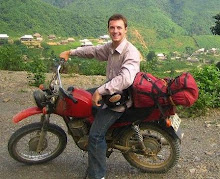
We took the early bus the next morning to the Panamanian border down a winding coastal road through banana plantations and jungle --- it REALLY made me wish I had a motorcycle. I've decided that traveling by motorcycle is the absolute best way to see a place. You get a full panoramic view of the landscape, you can interact with the locals more, and you have infinite freedom. Buses suck.

Crossing the border was actually fairly pleasant. It was by far the most relaxed border I have crossed on this trip. There was only one guy trying to rip everyone off, and we avoided him without too much hassle. We walked across the creaky bridge separating the two countries and stopped in front of the Costa Rica-Panama plaque to take a picture, then continued to immigration on the other side. In order to enter the country you need to have proof of onward travel, and luckily, I had printed out a copy of my flight itinerary so I went right through. Everyone else though had to buy a fake and expensive bus ticket back to Costa Rica -- basically a bribe.

The guy that was trying to rip us off had successfully herded all the rest of the backpackers into his van like cattle so that he could charge us ridiculous prices for dropping us off at the ferry docks. Being naturally skeptical in these kinds of situations, I asked around and found another van for a fraction of the price (it's really great to speak Spanish!!). I went back to the other van to tell everyone, and they all switched vans while the driver wasn't looking . We sped away in the cheap van while the other guy chased after us yelling and shaking his fist - sucker.

I met tons of interesting characters on my way to Bocas del Toro: a few Swedes, a bunch of Americans, and two Dutch girls - all traveling different parts of Latin America for anywhere from 2 weeks to 6 months. The boat ride out to the islands was absolutely beautiful. We motored our way through a mangrove forest that opened up to a Caribbean bay, where we passed brightly painted wooden huts and houses built on stilts over the water.

When we pulled up to the dock at the main town, we weren't harassed by anyone! I was blown away. We all headed to the two cheapest hostels in town to look for dorm rooms, but everything was full. The first place we found with rooms wanted to charge us $90 a night - no thanks. Jack and I split off from the main group with the two Dutch girls, and we wandered around the back streets trying to find a low key hostel before the rest of the hoard got to it first. A European expat came over and started chatting with us and offered us some advice. He listed the cheapest hostels he knew of, which we had already tried - all full - and then he apologized in advanced for pitching his own hostel and told us that he could give us hammocks at his place across the river for $5 a night. I have NEVER been to a place where locals will stop on the street to help you find a place to stay and not rip you off, even suggesting other places before their own if it works better for you. Amazing.

We ended up staying at another place he suggested on the main island - a very basic shack on stilts over the water that had a few dorm beds open. The 80 year old Panamanian woman who owned the place - Doña Oti - gave us the grand tour. There was a shared kitchen, lots of interesting backpackers, and a dock over the water with hammocks looking out toward the Caribbean - $6 a night. Perfect.

I'm out of internet time now, but I'll write more in the next few days.

Saturday, January 10, 2009

Back to Familiar Territory: Earthquakes and Beaches

I caught the 9am bus back toward the main highway from the shore, and I ended up running into some Canadian women that I had met on my way in. We hopped on the connecting bus together and made our way to the Costa Rica border.

We had all heard horror stories about this checkpoint, so we were preparing ourselves for a two hour crossing. It was certainly a clusterfuck - people trying to sell fake immigration papers, pushy hawkers and vendors, a complete lack of useful signage - but we made it through in a record 30 minutes.

On the other side we parted ways, and I found a luxury bus headed for San Jose - the capital. The bus was coming from Granada in Nicaragua, and all the seats were already full, so I paid the driver half price to hitch a ride in the jump seat up front with him until someone else got off and I could take their seat. It was actually a lot more fun being at the front with a full view of the scenery out the windshield. I had been to Costa Rica before, but the scenery once again impressed me. Three hours later, I finally got a seat. Another four hours later, and we arrived in the capital.

The layout of the streets in San Jose is fairly straightforward. It's a grid for the most part. The only problem is that a lot of the streets don't have signage, so it takes a while to get oriented. I walked into a thrift store near where I thought my hostel should have been, and I asked them for directions to the address I had. None of the workers had any idea. They didn't even know what street they were on. Finally I asked them if they had heard of the hostel I was looking for, thinking it might have gone out of business - as many things have in my outdated Rough Guide (I'm never straying from Lonely Planet again) - but none of them had heard of it. I left the store without any answers, and I turned to walk up the street, only to find my hostel two doors down. Ridiculous.

I put everything down in my room and left to find the Panama embassy, but it had already closed (at 4pm), so I walked back into the center of the city to find an internet cafe before dinner. Around 8 o'clock I went back out to get some cheap food, but everything had already closed. Things close EARLY in Central America - it's hard to get used to. The only place open was a very authentic Mexican restaurant called "Taco Bell". I ate a cheesy gordita crunch and called it a night.

The next morning I went to catch a bus as early as possible - no reason to stay in the city. I ended up sitting next to a Belgian flight attendant, and we had a great time chatting on the four hour drive to Quepos on the coast. The roads out to the coast were much better than I remember from five years ago. I had the bus driver drop me off in front of the TEFL center where my friend Sage was taking an English-teaching certification course. I got there just in time for her lunch break and I caught her coming down the stairs with another girl, Jess, who I had also traveled with in Israel. They had just spent a few months in Argentina studying Spanish together, and they decided to get certified in Costa Rica to teach English. Sage is planning on being here for about five months to teach after her course is over.

After lunch, Sage went back to class and I walked down to the town of Quepos to grab some food and kill some time until she was done. As I was sitting in a little street side restaurant I saw "red alert" flashing on the television. It turns out that only four hours after I left San Jose there was a 6.2 magnitude earthquake that rocked the Central Valley, the capital, and a few other main cities. I got out just in time! The owner of the restaurant reassured me by saying "It's no big deal. We get earthquakes all the time." (That was an exaggeration.) I walked up to the beach where I sat down to read a book, and within 20 minutes I had already witnessed a 5-person drug bust and another guy get arrested for driving his motorcycle drunk. I decided to leave that part of town.

When I got back to the school to meet up with Sage I told everyone about the earthquake. None of them had felt it either, but as I talked to people over the course of the next few days it seemed like most other people had. Sage, her flatmate and I all hopped on a bus and went to their new apartment to drop off our stuff. For an incredibly reasonable price, they were living in a brand new two bedroom apartment with a huge kitchen and a rooftop pool with a view of the Pacific - walking distance to the beach and a 50 cent bus ride into either neighboring town -- awesome.

We went into town to grab some dinner, and then we met up with a few of her classmates for drinks. As always, when you bring people together from around the world, you're bound to have some fascinating characters. Kelly was a girl from Boston who had been funding her world travels by dog sitting and entertaining rich housewives in the overly-wealthy suburbs where she lived. She had recently gotten back from a year or so of volunteering with AIDS victims in Zambia. Interesting girl. Even more out there - Steve was the son of American missionaries who had spent the past thirty years practicing medicine in Nigeria. He was born there and had been educated in international boarding schools since he was six. He went to a Christian college in the States, and then spent two years teaching English in Korea after he finished school. He had a perfect American accent, but could switch into Nigerian English on cue. Another very interesting character. Sage and Jess live in New Jersey and spend every summer working at a Jewish sleep away camp :) Conversation, consequently, was focused on four topics -- Africa, China, Korea, and Pennsylvania summer camp.

The next day while Sage was in class I met up with Paul, a realtor who has been working with my uncle to develop some beachfront property down the street from Sage's apartment. He gave me a tour of the nearly-completed condos, which are pretty spectacular. I spent the rest of the afternoon relaxing on the beach.

After Sage got out of class she came back to the apartment with a few of her classmates, and we made some rum and cokes and went to the rooftop pool to watch the sunset. We went to the grocery store across the street to pick up snacks and ingredients for dinner, and we made some kick-ass mango chicken before going down to Manuel Antonio for a beach bonfire and drinks.

We slept in today, and then I brought Sage down to the beach for the first time since she's been here. She had been too busy apartment hunting to actually see it before I came! We spent the rest of the day lounging, reading, listening to music, swimming, and getting sunburned.

Back at the apartment, we once again went up to the rooftop with a bottle of wine to watch sunset, where we met crazy Dennis - a pony tailed redneck from Atlanta who told us ridiculous stories about traveling the world with his two girlfriends, and explained to us that after going EVERYWHERE in the world, he had determined that Costa Rica was the absolute best country. We made a great dinner of chicken breast sauteed in wine sauce, garlic butter linguine, and broccoli with cheese, and called it a night.

Tomorrow is my last day with Sage, and then I'm headed over to the Caribbean side.

Pura vida.

Tuesday, January 6, 2009

Nicaragua is Great

Early the next morning I hopped on a bus for Granada. I had thought about stopping for a while in the capital - Managua - but as we pulled into town I realized there was nothing there for me. I got off the bus and immediately hopped in the first van headed for a place called Masaya.

Masaya wasn't a particularly attractive or interesting town, but it's known for its large artisan market. Some of the local surviving Aztec villages (yes, Aztec - not Maya) produce tons of tchatchkes for tourists and regular Nicaraguans. Lots of small wood carvings, paintings, woven clothing, hammocks - a fairly interesting assortment of local products. For the sake of the authenticity argument, I did see a substantially larger number of locals shopping there than I did gringos.

I walked around for a while taking in the scene, and I ended up getting myself a beautiful handwoven two-person cotton hammock. I bargained it down to about 9 bucks (thank you China for training me in the art of negotiation!!). I saw similar hammocks in other markets and stores for about 40 dollars, so I feel like I did pretty well. The girls that I bought it from folded it into a bundle the size of a small dog and helped me cram it into my backpack.

Next stop - Granada.

One of the oldest Spanish settlements in Central America, Granada definitely has an Old World charm. Pastel stucco houses and storefronts line the wide cobbled streets, much like the other colonial towns I have visited on my trip so far. The main distinction here was that there were more tourists, and there was a beautiful promenade stretching from the central park toward the Lake of Nicaragua, lined with pedestrian walkways, restaurants, and sidewalk cafes. It was very pleasant, but it felt a little fake. I think I liked León better.

After wandering around the streets, I headed down to the lake to look for the infamous freshwater bull sharks that I had seen on the Discovery Chanel as a kid. I didn't see any sharks, but I did see dozens of skinny cattle and horses grazing on the lawn that bordered the lake. It felt very out of place. This was a city, not the countryside. The lake was polluted, and the bums and dirty cows were a little too sketchy for me, so I walked back into town. I stopped to watch a local baseball game on my way back.

The sun was brutal, and I was getting dehydrated, so I turned to my favorite Nicaraguan past time - trying out fruit drinks that I didn't recognize. So far I had checked avena, semilla, and zapote off my list. All were delicious. I sat down at a cafe and asked what kinds of refrescos naturales were on the menu. I settled for chiacotamarindo. (I have no idea how to spell it.) It was pink and full of tiny grey seeds, and it tasted like bubblegum - the texture was a little bit like tapioca, or maybe like juicy fish eggs? Either way - it was very interesting.

I decided to continue my culinary adventure around Granada, so I bought some mangoes in a plastic bag from a woman on the street. They were green and unripe, and the woman poured a brown liquid on them and sprinkled something white on top. I was not ready for the flavor of the first bite - salty, bitter, spicy. The green mangoes were very bitter, the white stuff was salt, and the liquid was something like spicy soy sauce. I ate a few and then handed the rest off to a beggar.

I sat down at another streetside vendor and got a plate of whatever they were making. It was kindof like mashed potatoes covered in some kind of putrid smelling, fried crust, with spicy cabbage salad on top, served on a banana leaf. The mashed potato part was delicious, the crust - not so much. Some beggars came and ate my crust.

I was still thirsty, so I found another fresh fruit juice vendor who had a table with five cement buckets full of colorful liquids. I asked her what they were, and she mumbled names I didn't recognize. I pointed to the orange one, and she filled up a small plastic bag with ice shavings, ladled in the juice, stuck in a straw, and tied the bag shut around it. Once again, I have no idea what it was, I've never tasted anything like it, and it was delicious.

For dinner, I ate the typical grilled chicken, cabbage salad, fried plantains, and gallo pinto. I had a Fresca with it, which the woman immediately poured out of the glass bottle and into a plastic baggie. Interesting way to drink...

The next morning I headed south. I hadn't really decided where to go when I got on the bus, but I figured I would decide when I got to the next town. I could choose between the following: going to the islands in the lake and hiking a volcano, going to a surfing town to relax on the beach, or crossing the border and going to a cowboy town in Costa Rica. The chicken bus I was taking (old American school bus) was PACKED, and I was shoved in the back door where there was only enough room to stang in the aisle, squished against the back wall. There were two Canadians and two Americans packed in there with me, so at least I had some good company for the long ride. The Canadians were going to Costa Rica, the Americans to the island, and I ended up going to the beach. The island was too far, Costa Rica was too expensive, and the beach didn't involve any thinking or planning.

We all parted ways in Rivas, and I made my way down to San Juan del Sur - a small surfing village on the Pacific Coast near the border with Costa Rica. It seemed pleasant enough. My plan was to hang around waiting for my friend Sage to give me the green light when she rented an apartment in Costa Rica, and I would head down to meet up with her in a few days. I found a cheap dormitory hostel near the beach, and met my room mate - an old gray-haired hippie who was an expat from Brazil, but who had apparently never gotten over his years of living in Manhattan as a Hell's Angel during the 60s and 70s. He had a kid in León, whose mother was a "bitch." They didn't talk at all unless it was about their son. He was in San Juan because it was a convenient stop from the border, where he had just gone to renew his entry stamp and pick up a huge bag of weed and come cocaine from Colombia. I left him to roll a joint in the room, and I headed out to grab some lunch at a place that he recomended. The owner was another gray-haired, hippie expat who sat back (high) watching the people in his beachside restaurant. He has a handlebar mustache and spoke spanish to the bar tender in a VERY gringo accent. Interesting bunch of people. I felt like the Merry Pranksters were going to stroll by with walkers and oxygen tanks at any moment. I went to the beach.

I've basically been chilling for the past two days doing nothing but sleeping and reading on the beach and eating seafood. Life is tough, I know. Tomorrow morning I'm catching the first bus to the border, and I'll continue my journey in Costa Rica. Overall, Nicaragua has been great - very relaxed, very colorful, very lively. I would rank it up there with Guatemala.

Pura vida.

Saturday, January 3, 2009

The Long Schlep to Nicaragua

Luckily, someone had the foresight to assume that all the backpackers on the island would probably be fighting to get on the first ferry back to the mainland on January 2nd, so we bought our tickets in advance. Good thing we did! We got to the dock at 5:30am and the ticket window was PACKED. We never would have been able to leave.

The Canadians, the Australians, the Mainer, and I all traveled back into real Honduras together, and we parted ways in San Pedro Sula where they caught buses and planes to El Salvador, Mexico, and Guatemala respectively, and I caught a direct bus to the capital - Tegucigalpa. Once again, I was sitting next to a vomitting child. I'm starting to think it's standard bus procedure in Central America to have at least one passenger who can't handle the bumpy rides. Twelve bumpy hours later, I arrived in the capital.

My original plan was to meet up with the sister of the wife of one of our friends back in New Jersey, and I had already gotten in touch with her to let her know I might be stopping by, but when I got to the capital I couldn't find a computer with Skype on it, and it was too late to use any of the public phones, so consequently - and also in the interest of time further down the isthmus - I decided to move on from Honduras the next morning to continue my adventures in Nicaragua.

First about Tegucigalpa though - I was pleasantly surprised as our bus barreled over the mountains and into the valley that cradles the sprawling city at how picturesque it was. This is exactly how I had always pictured a Latin American capital -- huge, bustling, colorful, surrounded by mountains, lots of colonial buildings and a massive central cathedral. A mix between the landscapes of Athens and Rio with a distinctly Central American vibe -- Tegucigalpa is the first major city here that I've actually enjoyed and thought that I could spent a little more time exploring.

Although hectic, as expected, my next morning of travels was extraordarily efficient. I caught a taxi at 5:15am that brought me to the bus station just in time to catch my bus, which left at 5:30. I got to the next transit stop a few hours later, where I grabbed a quick lunch. As I was paying, the woman said ¨your bus is leaving,¨ and she pointed to the parking lot where, indeed, my van had started pulling out. I leisurely walked over and threw my bag on top and jumped in the moving van - squeezing myself onto a board in the front with 18 other sweaty Hondurans. Another bumpy hour later, I arrived at the border and grabbed my bag. I pummeled my way rugby style through the dozens of rickshaw drivers demanding that I get in their cart to be escorted to the other side of the border. I didn't want to deal with their crap. ¨But you need me to give you a ride! It's an 18km walk to the other side and the LAST bus to León is leaving from there in only 10 minutes!!!¨ Bullshit, buddy. I'm no amateur. 1km and 20 minutes later, I had passed through customs and crossed the foot bridge over the river into Nicaragua. The cop at the other side of the bridge casually checked my passport and paperwork and handed it back smiling, ¨Welcome to Nicaragua! The buses are 100 meters ahead on the left.¨ I stopped to get an orange ice pop for 50 cents and leisurely strolled over to the dirt lot where the buses and shuttles were waiting, and I flagged down the van I needed that had already started to pull away. See rickshaw drivers? I didn't need you.

The pace and energy completely changed on the Nicaraguan side. The sun was shining, the music was more relaxed, the people were happier and friendlier, and I sat just sat in the back of the van enjoying my ice pop and the fantastic views of dry brushlands, looming mountain ranges in the distance, and smoking volcanoes ahead of us. Not a care in the world. A few kilometers down the road a very enormous and very outgoing Nicaraguan woman hopped in the van with her two young kids and excitedly exclaimed ¨great! there's room in the back next to the skinny guy!¨ She squeezed her way in next to me and plopped one of her fidgety kids on each leg - she was the life of the party until we reached our destination.

This bus station was completely different from any I had seen in Central America so far. There were tons of vendors all over the lot selling dirt-cheap snacks and beverages, which was one of the things I love and miss most about Asia. Laughing kids, smiling old women, quarreling teenagers, markets with overwhelming varieties of tropical fruit, warm Latin music emanating from the growling buses, and best of all - no one yelling at me or trying to rip me off. I was totally digging Nicaragua.

My LAST bus of the long journey was simple enough - one hour, nice scenery, fruit vendors running through the aisles every time we stopped to pick someone else up. We finally arrived in León - the original Nicaraguan capital until some time in the 1850s. Just judging by the bus station and market at the outskirts where we were let out, I already knew I would like the city. Instead of taking a cab, I decided to do the half hour walk into the center on my own. I strolled past colorful stuccoed storefronts with red tiled roofs, happy grandmothers sitting in the shade on streetside rocking chairs, horses pulling carts down the cobbled streets, and tons of vendors selling fruits and drinks I have never seen before.

I dropped off my stuff at one of the most interesting hostels I have ever stayed in -- half hostel, half dentist. The woman was quite a character. Then I went out to explore the town - wandering through the numerous beautiful churches built centuries ago, the small colorful alleyways, and the main market, where I had one of the best meals I've eaten in Central America for only 3 dollars. As I was walking down a street near the central plaza, an old man yelled a greeting to his friend who was passing on the other side ¨Sandino is still alive! He isn't dead!¨ Yep - this is definitely Nicaragua :) This part of the country is where the Sandinista movement began, and you can definitely still see its influence all over the city. There are tons of socialist and Sandanista murals decorating the public parks and wall-space. My favorite mural was a picture of Sandino stepping on Uncle Sam's head -- very telling.

I found a pleasant cafe selling the best licuados I've had so far. Bascially tropical fruit milkshakes. Unbelieveably tasty and refreshing. I had three. One dollar each. Actually, I think I'm gonna go get another one now.

Tomorrow I'm off to Granada.

Wednesday, December 31, 2008

New Year in Honduras

Leaving Guatemala was a pain in the ass. It took me about 10 hours to get to the border of Honduras, everyone tried to rip me off, and I still wasn't feeling too well from the party the night before. To make it even better, for the entire van ride back to the capital a Spanish woman and her son were sitting next to me who both suffered from terrible motion sickness - they consistently puked every ten minutes for the entire trip. It was horrible.

By the time I got to the border it had already closed for the day, so I was forced to stay in some run down ladino town about an hour away. Bright and early the next morning I once again avoided getting ripped off by the van drivers trying to charge me the gringo price, and I got to the border unscathed - just in time to be forced to pay more bribe money to the immigration agents both leaving Guatemala and entering Honduras.

My first stop in the new country was a town called Copán Ruinas - the location of another famous Mayan ruins site. The vibe in this small, colorful mountain town was very relaxed - lots of pleasant people going about their business without too much concern for time or urgency. It was a much welcomed break from the previous two days of hellish travel. I hiked down a cobblestone road from the town to the ruins, taking in the tranquil mountain scenery. I wasn't too happy about paying the ridiculously high entrance fee, but I justified it by convincing myself that, as the country's main tourist attraction, it was a justified contribution as a tourist to Honduran infrastructure and development (or so I like to think...).

When I got to the ticket check, I was greeted by a flock of macaws. I have never seen wild macaws before - it was very cool. They were tame enough to let me walk right up to them and take pictures though, so I have a feeling they were domseticated for the tourists. Either way, they weren't in a cage and the could have flown off into the jungle if they had wanted to, so I'll keep believing that I ran into a flock of wild macaws. There were also a bunch of strange guinea pig things running around.

The ruins were very cool - nowhere near as amazing as Tikal - but interesting enough to spend the afternoon wandering around admiring the ancient architecture. The main attraction was the array of stelae - amazingly well preserved carvings that were scattered throughout the complex.

I spent the night at a bustling backpacker hostel in the center of town and caught the 6am bus the next day to start my journey up to the Bay Islands to do some Caribbean relaxing for New Year. 11 hours, two buses, a shared taxi, and a ferry later, I arrived on the island of Utila - known to be the least expensive and most backpackery of all the Bay Islands, so I figured I'd meet a good crowd to spend the holiday with.

I was expecting something Thailand-like with tons of cheap hostels, seaside restaurants and cafes, beautiful white sand beaches, etc... It wasn't like that - definitely not Thailand, not really Honduras, not really Caribbean - I'm not sure what I'd call it. There aren't great beaches here, and the sandflies are too vicious to allow you to relax anyway. I walked into a bunch of hotels looking for a room, but half of them were full, and the rest were either too expensive or no one was around to ask about prices or availability. Frustratedly, I gave in and went back to the main dock where everyone was hawking their hotels and dive packages. One guy handed me a flyer and sold me on his hotel - $250 for an advanced scuba certification course including free housing and two extra free dives. That was the cheapest dive certification I've ever seen, so I signed up. (The last time I dove was in Thailand over a year ago, so I've been getting a little rusty.)

I settled into the dorms and put down my bags after the long day of travel. No one I ran into at the hostel seemed too friendly, so I wandered off on my own to find dinner. (I later found out it was just beause they were all hung over from too much partying. They were actually very friendly.)
Bright and early the next morning, I set off for my first dive. The weather sucked above water (rainy season here), but I was gonna get wet either way so it didn't matter too much. I did my first dive to 100 feet, which was very cool - we explored a huge reef wall, which was pleasant but nothing extraordinary. We did a few tests to see the effects of nitrogen narcosis, but I wasn't affected by it... Apparently when you dive past 30 to 40 meters, the nitrogen in your blood concentrates to the point that it effectively gets you high. Lots of fun, but it can be dangerous when your life depends on being in control and aware of your oxyen level and surroundings. For lunch we went to a tiny island off the coast where the locals cooked up some delicious fish burgers. We asked what kind of fish was used, and the answer was, "multifish." Whatever that is, it was fantastic. The second dive was mostly meant to teach us about underwater navigation techniques.

The next day we did some of the best diving I've ever experienced. First, we did a wreck dive - about 15 minutes off shore there was a huge cargo tanker that had sunk to about 100 feet. Coral had taken over and converted the ship into a new reef. I have never felt such adrenaline on a dive before - it was awesome! We swam through the cargo hold and the wheel house, confusing the grouper and snapper as we invaded their territory. As we swam around the outside of the ship, my instructor stood on the bow and did a Titanic-esque pose with his arms extended and then slowly fell forward into the depths below. I think I'm hooked on wrecks now - it was really great.

For the second dive we went to a huge sand patch where we did a bunch of bouyancy excercises - swimming through hoops without touching the sides, obstacle courses, flipperless running sprints across the bottom, ultimate frisby, matrix style sword fighting with out fins. Basically we just spent an hour playing. Awesome.

I spent the rest of the day relaxing in the sun and meeting the rest of the people at my hostel. There were three Canadian guys from Vancouver, a kid from Maine, two Australian girls, and a Dutch kid who was staying in my dorm room with me. They're all a little nuts, but definitely fun.

Then as the sun began to set, we loaded up our gear and hopped back on the dive boat for my first night dive. It was very strange at first - descending into complete darkness with only a flashlight lighting up the plankton in the water immediately around you. Once we reached the bottom, everyone's flashlights collectively illuminated an entirely alien landscape. The reef at night is completely different. The colors are much more vivid with flashlights because during the day a lot of the sunlight is filtered out and all you can see are greens and blues - not so at night. The reds and oranges come alive. The coral also animates at night to feed. What normally just look like stony skeletons and bare branches during the day explode into fluffy, flowering tentacles. The shrimp, crabs, and lobsters scower the bottom for food. Octopus hide among the rocks and coral and hunt down unsuspecting fish - changing colors and patterns as they move between backdrops. It was absolutely fascinating.

The island, as I said, is a unique mix of cultures and people. The local population is made up of black Caribbeans, ladino Honduran immigrants, and white settlers who have been here for hundreds of years. Spanish is spoken and understood by most everyone, but the main language is an English Creole that sounds similar to that of Belize or Jamaica but has an odd Scottish twang. The strangest part about this mix is that the English and Scottish settlers who came centuries ago are completely integrated into local life. Imagine a young girl with blonde hair and blue eyes running around screaming profanities in Jamaican Creole. It's very hard to get used to.
New Year's Eve was a very relaxing, sunny day. The hostel we were staying at held a potluck barbecue for dinner - everyone brings some kind of meat - so we all ate delicious food and then set off tons of cheap fireworks before heading up to a bar called Treetanic to start the festivities. What a cool bar! It was designed like a nautical treehouse set back in the forested hills outside town. Afterwards we went to another more popular bar downtown, where we did the countdown and danced the night away. I met some Honduran girls, and we went back to their house to party local-style. It started raining so I camped out under a balony with a group of Dutch friends, who got a big kick out of teaching us Dutch profanities (neuken in de geuken). I ended the night eating fresh avocados with some friends back at my hostel. The door to our dorm room sealed itself shut because of the humidity and no one could pry it open, so Jasen the kid from Maine, Thijs the Dutch guy, and I were all locked out. We ended up just crashing in another empty room until the morning when we were finally able to get in.

New Year's day was easily the best day so far this year :) We all woke up late and lounged around the hostel drinking out of gallon-bottles of water and piecing together the stories of the previous night. Everyone was planning to go on a dive during the afternoon, but I tried signing up too late - they ran out of room. I went and hung out by the boat anyway, just in case someone else was too hung over to go and decided to cancel (very likely). I ended up getting a spot! We drove around to the northeast side of the island, which they rarely visit, and which is also close to the spot where they occasionally catch a glipse of the famously elusive whale sharks that spend their winters feeding in the area. I had my fingers crossed - it's always been a dream of mine to swim with a whale shark.

The first dive was fun - we mostly just fooled around while hovering over the reef. Half way through the dive I started feeling the effects of the night before, and I decided I would sit the next dive out. Jasen and two other divers agreed. The other 10 divers did the second dive while we waited on the boat.

Just after they had all descended, our captain spotted a very agitated school of tuna a few hundred meters away, and he pulled the boat around to check if it might be because a whale shark was feeding. The four of us that were still on the boat put on our masks and fins and sat on the bow just in case we spotted one. Sure enough, as we were looking down into the water just below us, an enormous spotted shark ascended at our feet. Too excited to think, the captain had to remind us -- "jump in!!!" We hopped in right on top of it and a swam like maniacs to keep up. I swam right over it for a while, close enough to reach down and feel its rubbery skin. It smacked me with its tail accidentally, so I backed off a little. Still, I was so exited that after a solid minute of swimming alongside the gigantic 30-foot fish, I completely forgot that I had been holding my breath underwater - no snorkel. We were blessed with about 15 minutes of its attention - longer than most people get to enjoy - before it swam back down to deeper water.

When everyone else got back on board we joked with them and said "Did you guys see anything interesting down there? We saw a big tuna or something.. we're not sure what it was, but we have a picture. You think you could tell us what it is?" The Spanish guy showed them his pictures, and everyone got incredibly jealous. But then only a few minutes later we spotted it again and they all got a chance to swim with it for a few more seconds before it disappeared once again.

What a way to start off the new year!!! I have never had such an exciting dive trip in my six years of diving. 2009, day one - I got to check another item off my "things-to-do-before-I-die" list :)

That night, we went back to the hostel and grilled wahoo steaks on the barbecue and went to sleep early to catch our 6am ferry the next morning back to the mainland.

Thursday, December 25, 2008

A Backpacker's Christmas

Spending Christmas in Lago de Atitlán has been incredibly relaxing. I woke up early on my first day here and bought a fresh loaf of coconut bread to munch on. Later on, I rented a kayak and spent the afternoon exploring the lake at the base of Volcán de San Pedro. The serene beauty of the landscape dissolved any remnants of North American stress that I had carried with me from the States. It's really hard to worry about anything when you are floating around on calm waters enjoying a sunny morning beneath the silhouettes of three enormous volcanoes. A good chunk of my book and a sunburn later, I headed back to the village to grab a late lunch. While I was in the middle of enjoying a huge, spicy beef burrito beside the lake, Mira and Milly showed up - they had finally arrived from Antigua. They were planning on going up to the main Catholic church later in the evening to check out Christmas mass, and I decided to join them for the experience. I spent the rest of the afternoon lounging on a hammock on my hotel balcony with a great view of the sunset behind the mountains on the far shore of the lake.

Around 8pm, I met up with Mira and Milly near the pier in the middle of the backpacker part of town, and we climbed up the steep cobblestone rode toward the center of the Mayan village. Waiting for mass to begin, we sat down at the front of the plaza and watched local life over cold beer and greasy tacos. Women and girls from all over the village slowly made their way toward the church, dressed in traditional skirts and blouses with the addition of ornately decorated church shawls. The men who passed by were dressed mostly in western clothes, but occasionally an old man would don traditional clothing as well - short white cotton trousers with colorful patterns sewn down the legs and cotton shirts with equally intricate striped patterns - and usually a cowboy hat.

We wandered up to the church entrance and realized we might have waited a bit too long. It was already packed!!! It seemed like there were about a thousand people crammed into the aisles. We squeezed into the back of the crowd. Luckily, the locals are very short and we had no problem seeing all the way to the front. I only stayed for about twenty minutes to get a feel for the atmosphere, but it was definitely worth the climb up the hill. The priest directed the service in both Spanish and the local Mayan dialect, marimba music - adapted for church hymns - played in the background, and old women shawled their heads in piety. The energy and faith shared by the congregation filled the room with each song they sang. The sermon given in Mayan was fascinating to listen to. The language sounds so foreign and ancient to my Anglo ears. It sounds almost like a mix of Arabic, Spanish, and Mongolian - lots of strange sounds we don't hear in English. Punctuating the sermon were frequent, loud explosions coming from the plaza behind us - children setting off fireworks to celebrate the occasion. Occasionally, one would burst so powerfully that we could feel the deafening pressure envelop the entire congregation.

I left early and headed back down to the village to get some sleep - I was exhausted from a loooonnggg dayy of kayaking around the lake and eating burritos ;) Thankfully I had some earplugs, otherwise I never would have been able to sleep through the raucous night of fireworks and celebration.

I slept in for my first time on Christmas morning, and spent the better part of the early afternoon lounging in my hammock and reading my book. I heard someone call my name from the street below, and I looked down to find the Brits and their Irish friends heading into town. Jenny ran up to give me a Christmas present - a stick of local artisan ginger-chocolate. I had lost track of them the day before, but it's a small village so I assumed I'd find them again before the big Christmas dinner that was being planned. They had gone up to the village market the day before to pick up ingredients, and we planned to meet at Milly and Mira's hostel (which had a stove) later in the evening to cook up a few dishes from each of our backgrounds: a potato dish by the Irish, potato pancakes by the Czech (how appropriate for Hanukah!), and something curried by the Brits. I headed up to the the market later on and bought noodles, tomatoes, and some other spices and vegetables to make a traditional New Jersey dish --- pasta a la whatever is around. I also picked up a pineapple and a bottle of rum, figuring you can't have a good Guatemalan Christmas without either.

I got to their hotel just before dark to find a huge spread of ingredients covering every possible surface. One table stacked with chicken legs and chunks of beef, a chair covered with vegetables, a pair of stools piled high with rum, beer, and fresh limes. Before I unloaded my ingredients, I promptly got the most important step out of the way - Cuba Libre numero uno. Matt and I headed down the steps through the garden to the terraced lawn on the edge of a cliff overlooking the lake to see what we could do about starting a campfire. Being in the tropics, there was very little dry wood or kindling to be found, and we also needed some skewers to do the meat grilling, so we wandered over to a small shop where the owner seemed to have a way of finding anything we could possibly need - he had already provided us with butter, limes, water, beer, lighters, and cutlery - so why not firewood and skewers? (By the way - his shop was about the size of the back of a pickup truck.) We explained what we needed to the guy and he led us across the street to his workshop/patio. Lo and behold, he had a stockpile of firewood rivaling any I've seen in the American northeast before winter! And the skewers? He just so happened to be building a roof for his patio, and he had a 15 foot long piece of skewer-thick, scrap metal lying on the ground next to a huge wire cutter. He cut us a few rusty pieces just the right length. Nobody wants to eat off of rusty skewers though.. but not to fear, he also had sandpaper to clean them up to a fresh sparkle. We still needed some kindling, so we grabbed a few dead cornstalks and dried husks from his garden and back we went to start our campfire by the lake.

After the fire was satisfactorily burning with a vengeance, I headed back up to the "kitchen" to help everyone else prepare the meal. The original 8 of us turned into 10 and then 13 and then 15 as we collected some South Africans, Guatemalans, and a French girl - and then, completely by surprise - the Brazilian/Guatemalan/Colombian/Argentinians and the Canadians showed up that we had met and partied with in Semuc Champey! The night was destined to be incredible. Conor and Karl the Irish guys worked on skewering the meat, Mira the Czech sliced onions and potatoes on his frisby, Jo the Brit crushed mint, limes, and sugar into a modified Coke bottle to make mojitos, Jenny worked on fresh guacamole and a garden salad, Matt stoked the fire and started working on the stash of beer, the South Africans worked on setting up tables and chairs on the terrace and covered them with banana leaves (makeshift plates) and candles, Milly the German slaved over the stove making potatoes and onions, vegetable coconut curry, and rice, and I cooked up a tasty, fresh tomato and garlic pasta sauce to put over an assortment of noodles that I found in the market. Karl, who was obsessed with the Sopranos, was ecstatic to have authentic Jersey Italian food.

Finally, after everything was done cooking and the sun had definitively set, the whole mob of us sat down family style for the most lively and eclectic Christmas dinner I have ever had the privileged to enjoy. More food than any of us could possibly eat, and more rum and beer than we could ever collectively finish off. After the first course, we remembered that we had been grilling the meat and potatoes over the coals of the campfire. Barely able to take another bite, we forced ourselves to eat a second course. The guitars eventually came out and the rest of the night was spent singing, laughing, and story telling in a Babel-esque smörgåsbord of languages and accents.

Somehow, I woke up at 7 the next morning to start a looonggg, painfulllll day of travel. Life is good.